

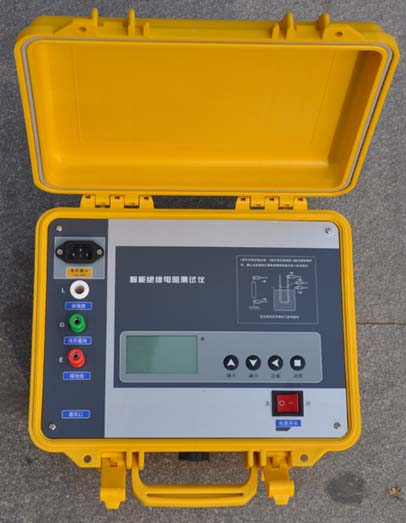
220V~220KV High-Precision Wireless High and Low Voltage Phase Detector with Voice Operation Prompts for Voltage Detection, Phase Detection, and Phase Sequence Measurement
The "220V~220KV High-Precision Wireless High and Low Voltage Phase Detector" you mentioned is a classic wide-range phase detection device in the power system. This type of equipment breaks the voltage level limitations of traditional phase detectors, covering various working conditions from low-voltage distribution networks to high-voltage transmission lines. Combining the voice prompts, voltage detection, and phase sequence measurement functions you are concerned about, here are the core technical features and operating specifications of such instruments:
1. Core Functions and Wide-Range Characteristics
Full Voltage Level Coverage: Supports automatic phase detection from 200V (or 220V) to 220kV, eliminating the need to purchase multiple sets of equipment based on voltage levels, greatly saving costs and reducing carrying burden.
Multi-Function Integration: In addition to the core same/opposite phase judgment, it also integrates functions such as high-voltage detection, phase angle testing, frequency testing, phase sequence judgment (positive/reverse phase sequence), and transformer group judgment.
Intelligent Voice and Intuitive Display: Equipped with a high-definition true color LCD screen, it can display phase difference, frequency, vector diagram, and phase detection results on the same screen. Built-in real-person voice broadcast function automatically prompts "X/Y signal normal", "Same phase", "Opposite phase", "Positive/Reverse phase sequence", etc., making single-person operation easier and more intuitive.
2. Contact and Non-Contact Phase Detection Specifications
To ensure the safety of high-voltage operations, this type of instrument sets strict phase detection methods for lines of different voltage levels:
Contact Phase Detection: Suitable for bare conductors below 35kV, or conductors with insulating sheath below 220kV. The probe hook can be directly used to contact the conductor for phase detection.
Non-Contact Phase Detection: When the bare conductor voltage exceeds 35kV (some equipment specifies over 110kV), non-contact phase detection must be used. During operation, only need to gradually approach the metal probe hook of the detector to the conductor, and phase detection can be completed after sensing the electric field signal, without directly contacting the high-voltage bare conductor, greatly reducing the risk of high-altitude operations.
3. Same/Opposite Phase Judgment Criteria
The instrument usually adopts A-level standards for result determination, using X line as reference to judge the phase by which Y leads X:
Same Phase: Phase difference between -20° and 25° (or 30°), the instrument voice prompts "Same phase", the screen displays same phase and the indicator light is on.
Opposite Phase: Phase difference between 95° and 145° or 215° and 265°, the instrument voice prompts "Opposite phase", the screen displays opposite phase and the indicator light is on.
4. Key Safety Operating Rules
Insulating Rod Usage Specifications: The standard configured insulating rod usually corresponds to voltage levels ≤220kV. During operation, the hand-held position must not exceed the safe handle position of the insulating rod; if the measured line voltage is higher than 220kV, a dedicated insulating rod longer than 3 meters must be replaced.
Regular Withstand Voltage Test: The insulating rod is a high-voltage safety tool. Before first use and annually, a power frequency withstand voltage test must be conducted to ensure insulation performance meets standards.
Safety Distance: During on-site testing, the human body and live parts must maintain the high-voltage testing safety distance specified by the power department.
💡 Further Assistance
This type of 220V~220kV wireless phase detector is a practical tool for grassroots operation and maintenance and substation maintenance. May I ask what your specific needs are currently:
Selection and Parameter Verification: Do you need me to compare the phase error accuracy (such as ±5° or ±12°) and wireless transmission distance of different manufacturers (such as Ruice, Guanyi, etc.) under the 220kV range?
On-Site Practical Operation Guidance: Do you need to understand the specific wiring, non-contact induction operation steps, and self-calibration process on ring main units, medium-voltage switchgear, or high-voltage overhead lines?
Compliance and Periodic Inspection: Do you need to query the national/power industry standards for this phase detector, or the specific withstand voltage test parameter requirements for insulating rods?