

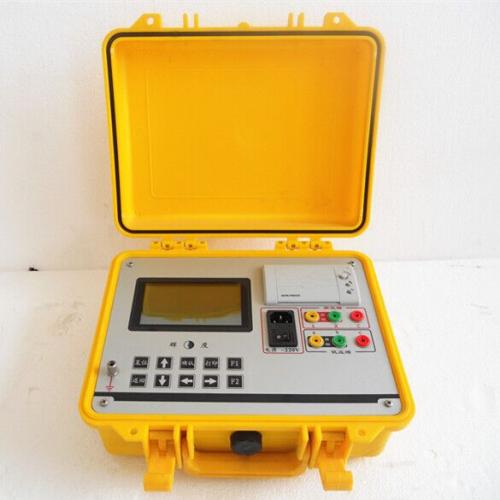
Dual-Channel Digital Partial Discharge Detection System Tester Transformer Mutual Inductor Withstand Voltage Test PD Detector
The "Dual-Channel Digital Partial Discharge Detection System" you mentioned is a core high-precision equipment used in the power system for insulation testing of high-voltage equipment such as transformers and mutual inductors. Combined with the "Withstand Voltage Test PD Detector" you mentioned, this type of equipment is typically used in conjunction with a non-partial-discharge induced withstand voltage test device, which precisely captures weak insulation defect signals while applying high voltage.
Based on industry mainstream technical standards, here is a summary of the core technical principles, functional advantages, and selection key points of this dual-channel detection system:
1. Core Advantages: Dual-Channel and Digital Differential Technology
Compared with traditional single-channel equipment, the dual-channel digital partial discharge detection system has significant anti-interference and diagnostic advantages:
Balanced Measurement Circuit: Dual-channel measurement and digital differential technology can flexibly form a balanced measurement circuit, effectively suppressing on-site interference pulse signals.
Pulse Polarity Discrimination: Supports synchronous measurement and polarity discrimination of signals from two measurement points, facilitating technicians in analyzing the source of partial discharge signals and accurately locating fault points.
Multi-Point/Multi-Unit Measurement: Conveniently enables simultaneous measurement at multiple points on a single test object, or simultaneous measurement of two test objects, making diagnosis of discharge locations in large transformers possible.
2. Intelligent Analysis and Anti-Interference Capability
Multi-Dimensional Spectrum Display: The system is usually equipped with fully Chinese-localized software, supporting the latest two-dimensional (Q-φ, N-φ) and three-dimensional (Q-φ-T, N-Q-φ) partial discharge spectrum displays, which intuitively show discharge patterns and make it easier to distinguish partial discharge pulses from external interference pulses.
Digital Window Technology: Features arbitrary phase windowing (single window, dual window optional, 360-degree ellipse rotation), using digital windowing technology to avoid interference frequency bands and prevent interference from affecting measurements.
High-Frequency Wide Detection Band: The 3dB bandwidth of mainstream equipment typically covers 10kHz~300kHz, with detection sensitivity up to 0.1pC level, enabling precise capture of extremely weak early insulation defects.
3. Application in Withstand Voltage Tests
In acceptance or factory tests of transformers or mutual inductors, partial discharge detection is usually combined with induced withstand voltage tests. The system uses a variable frequency power supply to excite the resonant circuit. After 60 seconds of withstand voltage, instead of reducing the voltage to zero, the voltage is directly lowered to the partial discharge measurement voltage for a 30-second partial discharge measurement. At this time, the high anti-interference capability and high sensitivity of the dual-channel partial discharge detector are crucial.
4. Key Selection and Compliance Recommendations
Standard Compliance: When purchasing, it is necessary to confirm that the equipment fully complies with international and domestic partial discharge measurement standards such as IEC-270 and GB7354.
Background Noise Control: For ultra-high-voltage equipment of 500kV and above, the equipment's own background partial discharge noise should be as low as possible (e.g., controlled below 1pC) to ensure no missed or false judgments.
Automation Level: It is recommended to choose equipment that supports fully program-controlled operation, enabling automatic calibration, automatic synchronization, automatic voltage recording, and automatic generation of standardized test reports.
💡 Further Assistance
The dual-channel partial discharge detection system is a key defense line for ensuring the safe operation of large power equipment. May I ask what your specific needs are currently:
Complete Equipment Selection: Do you need me to sort out the complete configuration scheme and core technical parameter matching recommendations for the "non-partial-discharge induced withstand voltage device + dual-channel partial discharge detector"?
Spectrum Analysis and Diagnosis: In actual testing, have you encountered complex interference signals and need assistance in interpreting two-dimensional/three-dimensional partial discharge spectra to determine whether it is internal insulation discharge or external corona interference?
Test Procedures and Standards: Do you need to understand the specific voltage boosting procedure, settling time requirements, and on-site anti-interference wiring specifications for partial discharge tests on transformers or mutual inductors?