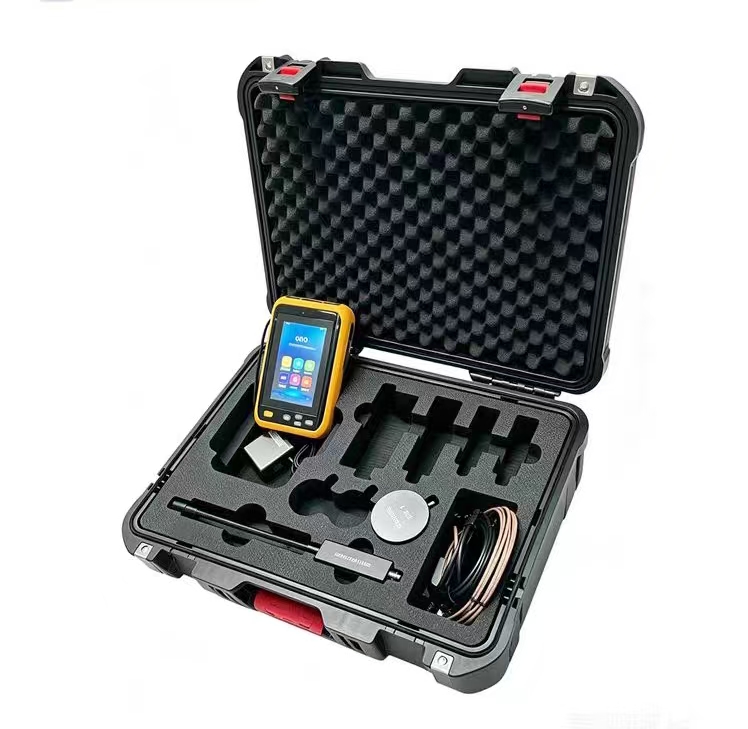

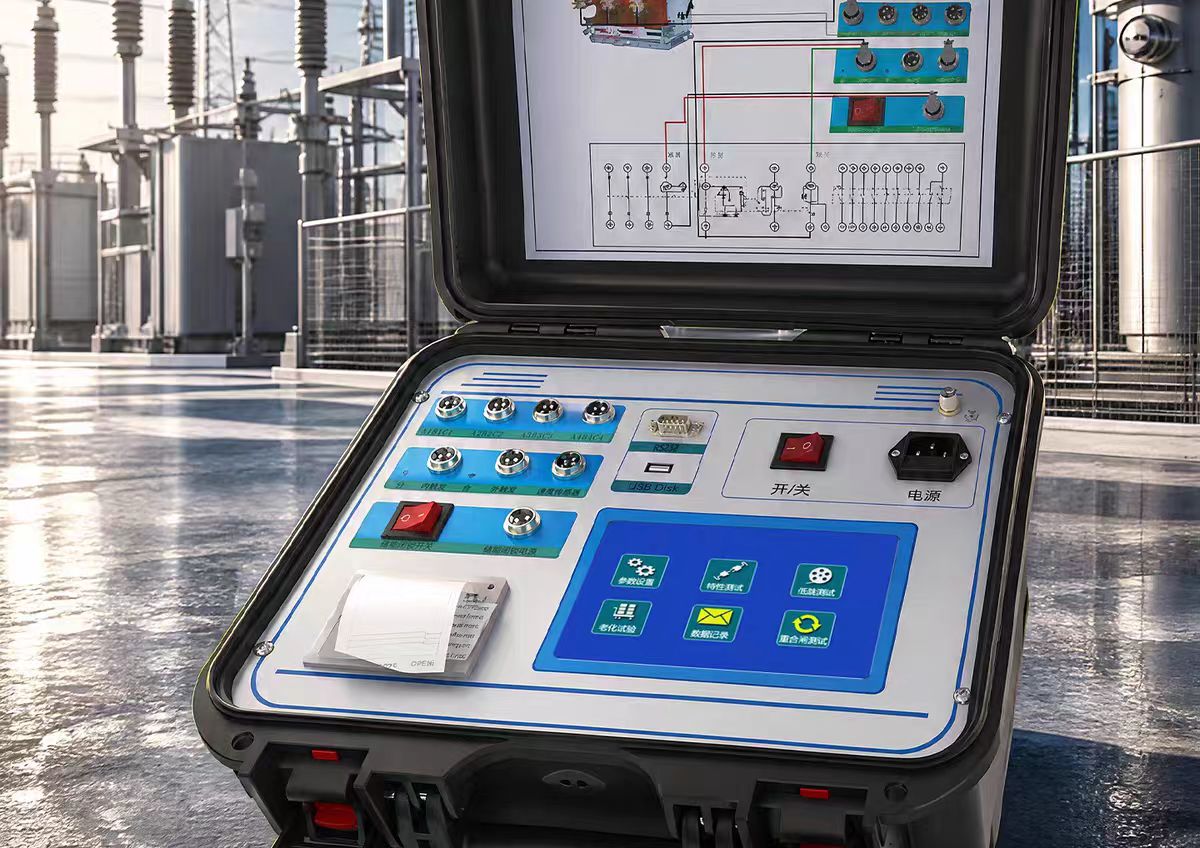
Insulation Resistance Tester
An insulation resistance tester (also known as a megohmmeter, megger, high resistance meter, or digital megohmmeter) is a specialized instrument used to measure the insulation resistance of electrical equipment, circuits, and materials. It generates an internal DC high voltage applied to the test object, measures the weak leakage current, and calculates and displays the insulation resistance value. It is the core tool for the "health check" of electrical equipment and the first line of defense for ensuring electrical safety.
Working Principle
Based on Ohm's law (R = V / I), the instrument generates a known DC high voltage V, applies it between the conductor and the housing (or ground), measures the weak leakage current I flowing through the insulator, and automatically calculates the insulation resistance R.
In actual measurement, the current flowing through the insulator consists of three parts:
Capacitive current: The insulator acts as a capacitor, with a large initial charging current that rapidly decays to zero within seconds to tens of seconds.
Absorption current: The molecules of the insulating material rearrange under the electric field and absorb electrical energy, generally taking one minute or longer to approach zero.
Leakage current: The steady-state current that truly reflects insulation quality; the smaller it is, the better the insulation performance.
It is precisely because of the existence of capacitive current and absorption current that the reading needs to stabilize during testing (usually the value at 60 seconds, R60s, is taken), which is also why the "megger" needs to be cranked uniformly for one minute before reading. Main Functions and Diagnostic Tests
Basic Measurement
Measures high-value insulation resistance, with a range up to 0.1MΩ to 400GΩ or even higher (high-end models can reach 35TΩ).
Diagnostic Tests
Professional insulation resistance testers support multiple diagnostic modes for in-depth assessment of insulation condition:
Dielectric Absorption Ratio (DAR): R60s / R15s, the ratio of insulation resistance at 60 seconds to that at 15 seconds, used for quick judgment of whether insulation is damp.
Polarization Index (PI): R10min / R1min, the ratio of insulation resistance at 10 minutes to that at 1 minute, a core indicator for evaluating the aging degree of insulation in large motors and transformers.
Dielectric Discharge (DD): Determines whether there is moisture or contamination inside the insulation based on the discharge rate.
Step Voltage (SV) / Ramp Test: Gradually increases the test voltage to identify potential hidden insulation defects.
Pass/Fail Comparison Mode: Sets thresholds to automatically determine pass/fail, suitable for batch repetitive testing. Key Technical Parameters
Table
Download as Table
Export as Image
Parameter Typical Range
Test Voltage 50V / 100V / 250V / 500V / 1000V / 2500V / 5000V / 10kV / 15kV
Measurement Range 0.01MΩ ~ 35TΩ (depending on model)
Short Circuit Current 1mA ~ 8mA (larger means faster charging and more stable readings)
Safety Rating CAT III 1000V / CAT IV 600V
Protection Rating IP54 ~ IP65
Operating Temperature -20℃ ~ +55℃
Data Storage Supports USB/Bluetooth transmission, PC software analysis. Test Voltage Selection Guide
Selecting the corresponding test voltage based on the voltage level of the device under test is key to ensuring test effectiveness and safety:
Table
Download as Table
Export as Image
Device Under Test Recommended Test Voltage
Low-voltage equipment (220V/380V) 500V
Medium-voltage equipment (1kV~10kV) 1000V ~ 2500V
High-voltage equipment (35kV and above) 5000V ~ 10kV
Ultra-high-voltage equipment 10kV ~ 15kV. Main Application Areas
Power systems: Insulation testing of transformers, generators, motors, cables, instrument transformers, surge arresters, and switchgear.
Communication industry: Insulation testing of communication lines and metal sheaths of optical cables.
Electromechanical installation: Insulation acceptance of newly installed equipment before commissioning.
Petrochemical industry: Periodic insulation testing of electrical equipment in hazardous areas.
New energy: Insulation testing of photovoltaic inverters, wind power converters, and energy storage battery packs.
Electronics manufacturing: Insulation quality control of PCB boards, lithium battery packs, and other products.
Building electrical: Insulation testing of distribution lines and grounding systems. Usage Instructions
Preparation: Confirm that the device under test is completely de-energized, and fully discharge the device (especially capacitive devices) using a grounding rod or the instrument's built-in discharge function; clean surface dirt and moisture from the test area.
Wiring: Connect the L terminal (line) to the conductor under test, the E terminal (ground) to the equipment housing or earth, and the G terminal (guard) to the guard ring or cable shield to eliminate surface leakage current interference.
Range selection: Select the test voltage based on the voltage level of the device under test.
Measurement: Press the test button, wait for the reading to stabilize, and record (for routine tests, read the 60-second value; for diagnostic tests, read the 15-second and 10-minute values to calculate DAR/PI).
Discharge: After the test, the instrument automatically or manually discharges the device under test; only after confirming complete discharge can the wiring be removed. Major Brands and Models
International Brands
Fluke: 1508 (≤1000V/10GΩ), 1535/1537 (≤2500V/500GΩ), 1555 (≤10kV/2TΩ), industry benchmark, with comprehensive intelligent diagnostic and data management ecosystem.
Megger: S1 series (5kV/10kV/15kV, up to 35TΩ), leading technology in high-voltage field, with 8mA noise suppression capability and patented PI predictor (obtains 10-minute PI value in 3 minutes).
HIOKI: IR4056-21, lightweight design, smooth Bluetooth connection and APP analysis experience.
KYORITSU: 3125A, Japanese brand, for high-voltage insulation testing.
Domestic Brands
UNI-T: UT501C/UT502C/UT510, extremely cost-effective, suitable for daily basic testing.
Jiangsu Jiuyi: Supports 500V~5000V multi-range output, built-in DAR/PI automatic calculation, suitable for power engineering.
Shanghai Shengxu: Dual display design (mechanical pointer + LCD screen), automatic range conversion.
ARMICO: AR3125, 5000V test voltage, supports polarization index testing. Common Misconceptions and Safety Precautions
Common Misconceptions
Misconception 1: A multimeter can replace an insulation resistance tester. The resistance range of a multimeter only outputs a low voltage of 3-12V, which cannot simulate the high-voltage operating conditions of actual equipment, and its maximum range is only about 20MΩ, while qualified insulation is generally above hundreds of megohms. Equipment that passes low-voltage testing may break down and leak during high-voltage operation; this is a typical violation.
Misconception 2: High-voltage testing will damage the equipment. Insulation resistance testing is non-destructive; the standard test voltage is lower than the equipment's withstand voltage test voltage, and the output current is at the microampere/nanoampere level with extremely low energy, causing no damage to qualified insulation. Its purpose is precisely to screen out unqualified insulation in advance and avoid sudden accidents during operation.