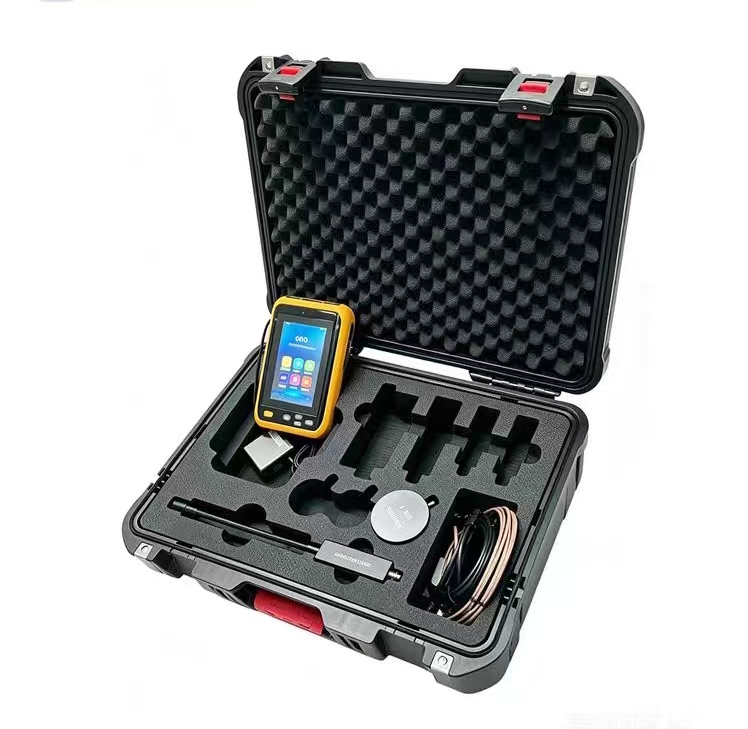

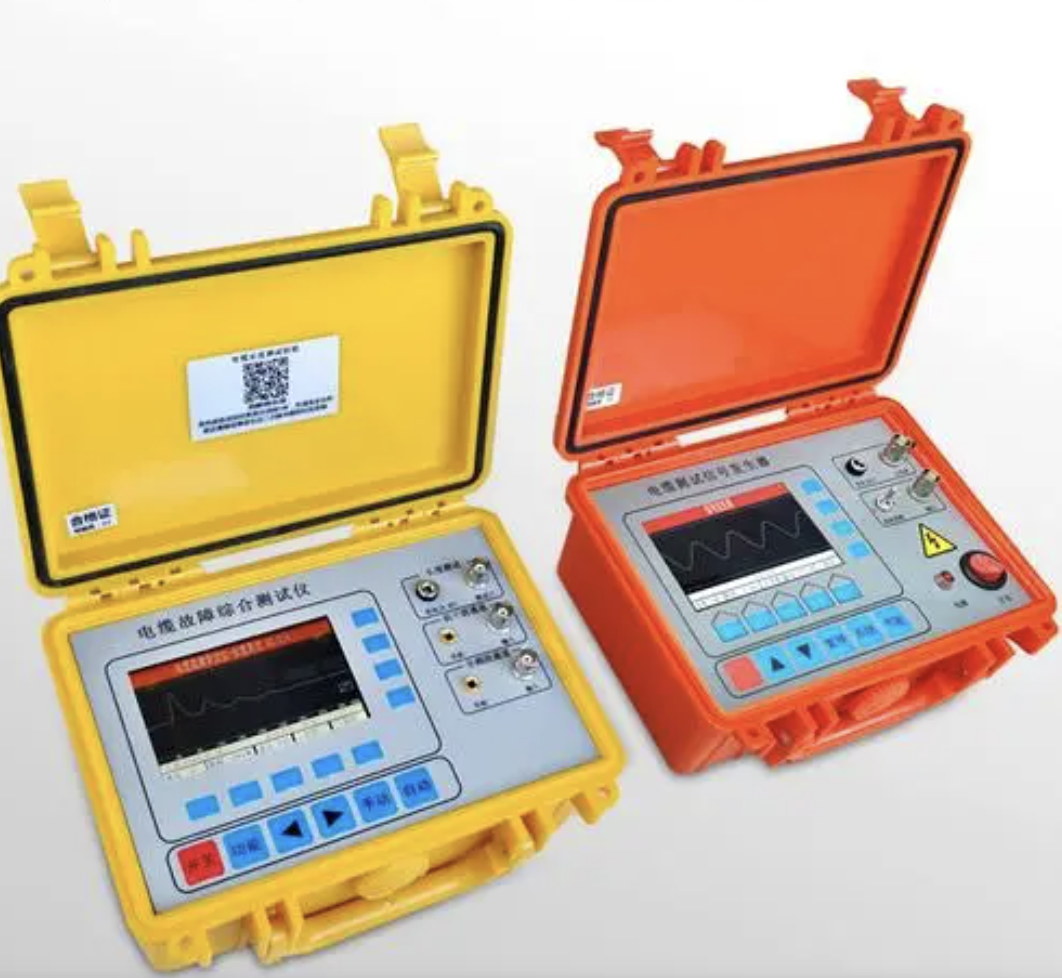
Online Partial Discharge Tester
An online partial discharge (PD) tester is core equipment in power systems for long-term, real-time monitoring of the insulation status of high-voltage equipment. It can capture weak discharge signals generated by insulation degradation 24/7 while the equipment is in normal operation, thereby transforming maintenance mode from "passive repair" to "active prevention" and effectively avoiding sudden power outages.
Core Detection Technologies and Principles
Modern online PD testers typically adopt a multi-modal sensing fusion approach, comprehensively utilizing the following mainstream detection methods based on the characteristics of different equipment:
Ultra-High Frequency Method (UHF)
Principle: Receives electromagnetic wave signals in the 300MHz~1.5GHz frequency band generated by PD.
Advantages: Extremely high sensitivity (up to 1~5 pC) and strong anti-interference capability. Particularly suitable for fully metal-enclosed equipment such as GIS (Gas-Insulated Switchgear) and GIL, where signal attenuation is minimal within the metal cavity.
High-Frequency Current Transformer Method (HFCT)
Principle: Uses a high-frequency current transformer clamped onto the grounding wire or cable shield layer to pick up PD pulse currents (typical frequency band 30kHz~30MHz) through electromagnetic induction.
Advantages: Non-contact inductive coupling, installation without power outage. Signals can propagate along cables over long distances (up to 1 km or more), making it ideal for long-distance monitoring of medium and high-voltage cables, transformers, and rotating machines.
Transient Earth Voltage Method (TEV)
Principle: Monitors millivolt-level transient voltages on the surface of switchgear enclosures caused by internal PD.
Advantages: Specifically designed for non-contact online monitoring of metal-enclosed equipment such as switchgear, enabling rapid assessment of discharge severity.
Acoustic Emission Method (AE)
Principle: Captures mechanical vibration acoustic waves in the 20kHz~300kHz frequency band generated by PD.
Advantages: Completely immune to electromagnetic interference, and when combined with acoustic-electric joint positioning technology, can precisely locate the discharge point.
Main Application Scenarios
GIS/GIL Equipment: Typically uses UHF sensors (built-in or externally mounted at basin-type insulators) combined with ultrasonic sensors to build a dual-mode online monitoring system, accurately capturing defects such as internal conductor burrs, air gaps, and floating potentials.
Power Cable Systems: Primarily uses HFCT sensors installed at the grounding down-conductors of cable joints and terminations. A small number of sensors can cover long lines, with a focus on monitoring cable joints where over 90% of faults occur.
High-Voltage Switchgear: Integrates TEV, UHF, and AE sensors to assess the insulation status of busbar and circuit breaker compartments in real time, achieving high-accuracy fault alarms even in strong interference environments.
Power Transformers/Generators: Often uses UHF and acoustic sensor arrays, and some advanced devices also incorporate infrared thermal cameras for uninterrupted PD monitoring and spatial location.
Core Functions and System Architecture
Modern online PD monitoring systems typically adopt a four-layer architecture design: "sensing layer—transmission layer—analysis layer—application layer":
Edge Computing and Anti-Interference: Front-end acquisition units are equipped with high-performance chips such as FPGAs to achieve on-site data processing and pattern recognition. Combined with deep learning algorithms, they can effectively distinguish PD signals from corona interference and switching operation noise, with fault recognition rates reaching over 90%.
Multi-Channel Synchronous Acquisition: Supports synchronous sampling of multiple sensors (with inter-channel synchronization times reaching nanosecond levels), providing a data foundation for precise phase analysis and spatial location.
Intelligent Analysis and Early Warning: The backend system automatically generates PRPD/PRPS patterns and trend charts to assess equipment health indices. When PD exceeds limits, alarms (such as SMS or APP push notifications) can be actively sent via CAN bus, 4G/5G, LoRa, etc.
Remote Operation and Maintenance Management: Supports standard communication protocols such as IEC 61850, and allows remote data viewing, historical trend review, and software remote