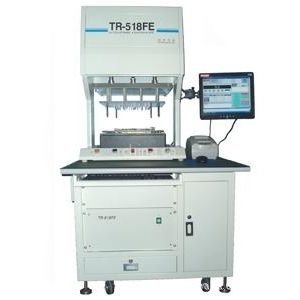

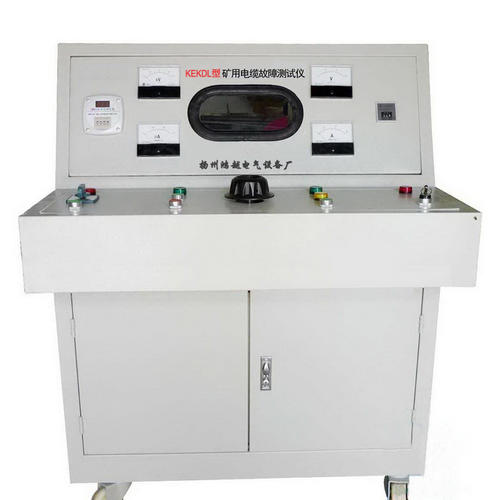
Online Partial Discharge Tester
Online Partial Discharge Tester (full name: Online Partial Discharge Testing/Monitoring System) is a professional device that continuously monitors the internal insulation status of high-voltage electrical equipment 24/7 while the equipment is in operation without power interruption. By capturing partial discharge (PD) signals in real time, it helps operation and maintenance personnel detect and address insulation defects before they develop into serious faults. It is one of the core tools for the power system's transition from "periodic maintenance" to "condition-based maintenance."
What Is Partial Discharge
Partial discharge refers to a non-penetrating discharge phenomenon that occurs when the electric field strength in a localized area of the insulation system of high-voltage electrical equipment exceeds the insulation withstand value.
Common causes include:
Poor cable termination fabrication workmanship
Loose busbar connection points
Moisture or contamination on insulator surfaces
Thermal aging and electrical aging of insulation materials
Non-uniform electric field distribution
In the early stage of partial discharge, the energy is extremely small with no obvious external manifestations, making it difficult to detect through traditional inspection methods; however, prolonged persistence will gradually erode the insulation structure and may ultimately cause phase-to-phase short circuits or ground faults.
Detection Principles (Multi-Modal Fusion)
Online partial discharge monitoring systems typically employ a combination of multiple detection technologies, enhancing detection rates and localization accuracy through signal complementarity:
Detection Method Detection Frequency Band Principle Features
Ultra-High Frequency Method (UHF) 300MHz~3GHz Captures electromagnetic pulse signals generated by discharge High sensitivity, strong anti-interference, suitable for internal discharge detection
Ultrasonic Method (AE/UA) 20kHz~300kHz Collects mechanical vibration waves generated by discharge Outstanding resistance to electromagnetic interference, effective for surface discharge and corona discharge
Transient Earth Voltage Method (TEV) 3~100MHz Monitors millivolt-level transient voltage on cabinet surfaces Easy to install, no power outage required, suitable for switchgear
High-Frequency Current Method (HFCT) Wideband Detects pulse current in grounding down-conductors through high-frequency current transformers Suitable for online monitoring of cables, transformers, and other equipment
System Architecture
Online partial discharge monitoring systems typically adopt a four-layer architecture design of "perception layer—transmission layer—analysis layer—application layer":
Perception Layer: Deploys composite sensor arrays (UHF, AE, TEV, HFCT) with magnetic-mount or rail-mount non-invasive installation, requiring no changes to equipment electrical characteristics
Transmission Layer: Supports multiple communication methods including LoRa, 4G/5G, Ethernet, and RS485, ensuring stable data transmission in complex electromagnetic environments
Analysis Layer: Equipped with a deep learning-based discharge pattern recognition engine that automatically distinguishes partial discharge from corona interference, switching operation noise, etc.
Application Layer: Achieves equipment health index assessment, tiered alarms, trend prediction, and remote operation and maintenance management through the monitoring platform, supporting viewing on Web and mobile terminals at any time
Core Functions
Real-Time Online Monitoring: Continuously collects partial discharge data 24/7 while equipment is in normal operation, without power interruption
Multi-Pattern Analysis: Provides multiple analysis methods including PRPD (Phase-Resolved Partial Discharge), PRPS (Phase-Resolved Partial Discharge Sequence), trend charts, and phase charts
Intelligent Diagnosis: Automatically identifies discharge types (internal discharge, surface discharge, corona discharge, floating discharge, etc.) based on deep learning algorithms
Tiered Alarms: Automatically pushes alarm information when partial discharge levels exceed set thresholds, supporting multiple notification methods including email and SMS
Trend Prediction: After long-term data accumulation, can assess insulation degradation trends, providing data support for equipment life assessment and maintenance decisions
Remote Access: Supports remote viewing of monitoring data via Web browsers; some systems support LTE/5G mobile communication interfaces
Edge Computing: Data processed locally, analyzed remotely, reducing transmission latency and improving system response speed
Main Technical Parameters
Table
Download as Table
Export as Image
Parameter Item Typical Specification
UHF Detection Frequency Band 300MHz~3GHz
AE Detection Frequency Band 20kHz~300kHz
TEV Detection Frequency Band 3~100MHz
Detection Sensitivity ≤0.1pC (high-precision type), minimum detectable 5pC (standard type)
Sampling Rate 0.5M~20M selectable
Gain Dynamic Range 120dB
Number of Monitoring Nodes Single system supports 30~200+ monitoring points
Communication Methods LoRa, 4G/5G, Ethernet, RS485
Sensor Power Supply Built-in lithium battery, low-power design can operate continuously for over 3 years
Impact Resistance Can withstand 600kV flashover impact without terminal damage or data loss
Service Life ≥10 years
Applicable Equipment and Application Scenarios
Equipment Under Test Recommended Detection Method Typical Scenario
High-Voltage Switchgear/Center-Mounted Cabinets TEV + AE + UHF Substations, switching stations, distribution rooms
Power Transformers UHF + AE + HFCT Power plants, substation main transformers
High-Voltage Power Cables HFCT Cable joints, termination online monitoring
GIS Composite Apparatus UHF Dedicated Sensors High-voltage substation GIS rooms
Generators/Motors UHF + AE Power plants, large industrial and mining enterprises
Instrument Transformers/Bushings UHF + AE Substation equipment inspection
Selection Recommendations
Switchgear Partial Discharge Monitoring: Choose the TEV+AE two-in-one sensor solution, which is easy to install and cost-effective, suitable for batch deployment in distribution stations
Transformer/GIS Online Monitoring: Choose the UHF+AE multi-modal fusion solution for high sensitivity and good localization accuracy
Cable Online Monitoring: Choose the HFCT high-frequency current method, installing sensors at grounding down-conductors without modifying the cable body
Remote Operation and Maintenance Needed: Choose intelligent systems that support Web platforms, 4G/5G communication, and email alarms
Limited Budget/Temporary Inspection: Portable partial discharge detectors can be selected for temporary use during live-line inspection