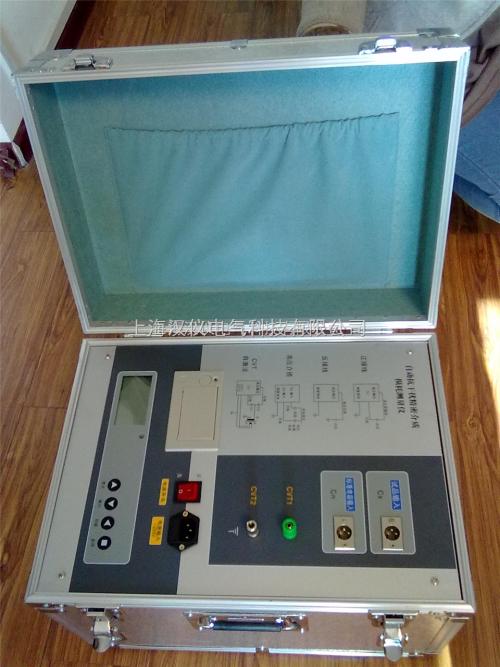

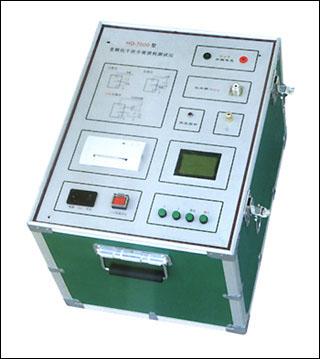
Online Partial Discharge Tester
The Online Partial Discharge Tester (Partial Discharge Online Monitoring Device) is an intelligent monitoring system installed on high-voltage electrical equipment that performs 7×24-hour uninterrupted real-time acquisition, analysis, and early warning of partial discharge (PD) signals in the equipment insulation system. It is the core technical means for realizing the transformation of power equipment from "periodic maintenance" to "condition-based maintenance."
Working Principle
Partial discharge refers to the non-penetrating discharge phenomenon that occurs in local areas of the insulation system of high-voltage electrical equipment. In the initial stage of discharge, the energy is extremely small and there are no obvious external manifestations, making it difficult to detect through traditional inspections, but it will continuously erode the insulation structure and may eventually cause phase-to-phase short circuits or ground faults.
The online partial discharge tester uses sensors installed on the equipment to capture in real time the electromagnetic waves, ultrasonic waves, or transient voltage signals generated by discharge. After amplification, filtering, and digitization by the signal processing unit, the back-end software performs pattern recognition and trend analysis, thereby judging the insulation status of the equipment and providing early warning. Core Detection Technologies
At present, three detection technologies are mainly used, and in practical applications they are often combined to improve accuracy:
Table
Download as Table
Export as Image
Technology Detection Frequency Band Features
Ultra-High Frequency Method (UHF) 300MHz~3GHz Strong anti-interference capability and high sensitivity, can penetrate metal cabinets, suitable for detecting internal discharge
Ultrasonic Method (AE) 20kHz~300kHz Sensitive to mechanical vibration, good at detecting surface discharge and corona discharge, can assist positioning
Transient Earth Voltage Method (TEV) 3MHz~100MHz Induces pulse voltage through the cabinet surface, easy to install, no power outage required, suitable for switchgear
In addition, there are also High-Frequency Current Transformer Method (HFCT, coupling 3~100MHz signals, clamp-type installation on cable ground wires) and Pulse Current Method (based on IEC 60270 standard, the most mature benchmark method), etc.
System Composition
A complete online partial discharge monitoring system usually consists of the following parts:
Sensors: UHF sensors (built-in/external), ultrasonic sensors, TEV sensors, HFCT sensors, etc., selected according to the type of equipment being monitored
Signal Acquisition and Processing Unit: Responsible for signal amplification, filtering, A/D conversion, and preliminary data processing, with overvoltage protection and watchdog functions
Communication Unit: Supports multiple protocols such as RS485, Ethernet, CAN bus, and wireless transmission, and can upload data to the back end or cloud platform
Back-end Analysis Software: Has functions such as PRPD spectrum generation, trend analysis, threshold alarms, historical data query, and equipment health index (HI) evaluation
Uninterruptible Power Supply (UPS): Ensures continuous operation of the system in the event of a power failure
Key Technical Parameters
Table
Download as Table
Export as Image
Parameter Typical Range
Detection Sensitivity ≤0.5pC (laboratory conditions), generally ≤1pC on site
Sampling Rate 100MS/s~200MS/s
Detection Frequency Band 100kHz~100MHz (HFCT); 300MHz~3GHz (UHF)
Measurement Channels 2~30 channels, expandable
Sampling Accuracy 12Bit
Positioning Accuracy ≤1 meter (multi-sensor time difference positioning)
Alarm Response Time ≤0.3 seconds
Data Storage Continuous storage ≥3 months
Operating Temperature -10℃~50℃
Communication Interface IEC 61850, RS485, Ethernet, wireless
Applicable Equipment and Application Scenarios
GIS (Gas Insulated Switchgear): Monitors discharge defects in internal insulators, contacts, and other parts
Switchgear: Monitors discharge caused by loose busbar connection points, damp insulators, poor cable head manufacturing processes, etc.
Power Transformers/Reactors: Monitors insulation deterioration of windings, iron cores, bushings, etc.
High-voltage Cables: Monitors the insulation status of weak parts such as cable joints and terminations
Generators/Motors: Monitors the insulation condition of stator windings
Instrument Transformers, Surge Arresters, Bushings: Monitors internal insulation defects
Core Advantages
All-weather real-time monitoring: 7×24-hour uninterrupted operation, not limited by detection cycles, no power outage required
Early warning: Can capture discharge signals in the early stage of insulation deterioration, avoiding unplanned outages and sudden accidents
Intelligent diagnosis: Combines pattern recognition algorithms to distinguish interference signals from real discharge, and automatically generates PRPD spectra and health indices
Remote management: Supports multiple methods such as Web remote access, mobile APP alarm push, and SMS notifications
Data accumulation: Long-term data can build insulation deterioration trend models, providing a scientific basis for equipment life assessment and maintenance decisions
Related Standards
IEC 60270: Benchmark standard for partial discharge measurement
GB/T 7354: National standard for partial discharge measurement
DL/T 417: Guide for on-site measurement of partial discharge in power equipment
GB/T 16927 Series: High-voltage test technology standards
Q/GDW 10540.5-2025: Type test standard for partial discharge monitoring systems in the power industry
🛒 Selection Points
Clarify the type of equipment being monitored: Different equipment such as GIS, switchgear, transformers, and cables corresponds to different sensor configuration schemes
Selection of detection technology: According to the on-site electromagnetic environment and monitoring requirements, choose a single technology or a multi-technology fusion scheme
Sensitivity and anti-interference: Focus on the sensor frequency response range, signal-to-noise ratio, and electromagnetic compatibility performance
Communication compatibility: Ensure that the system communication protocol is compatible with the existing substation automation system (such as IEC 61850)
Scalability: Consider the channel expansion capability for adding monitoring points later
Software functions: Whether it supports remote access, automatic alarms, trend analysis, and expert diagnosis