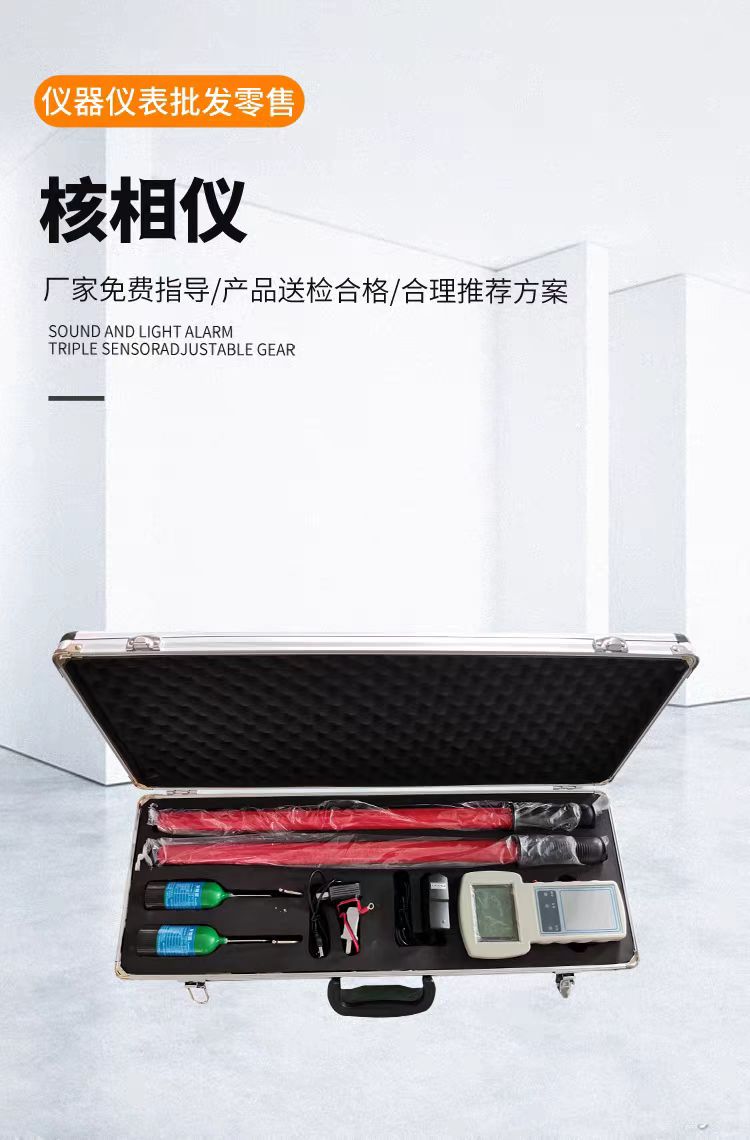

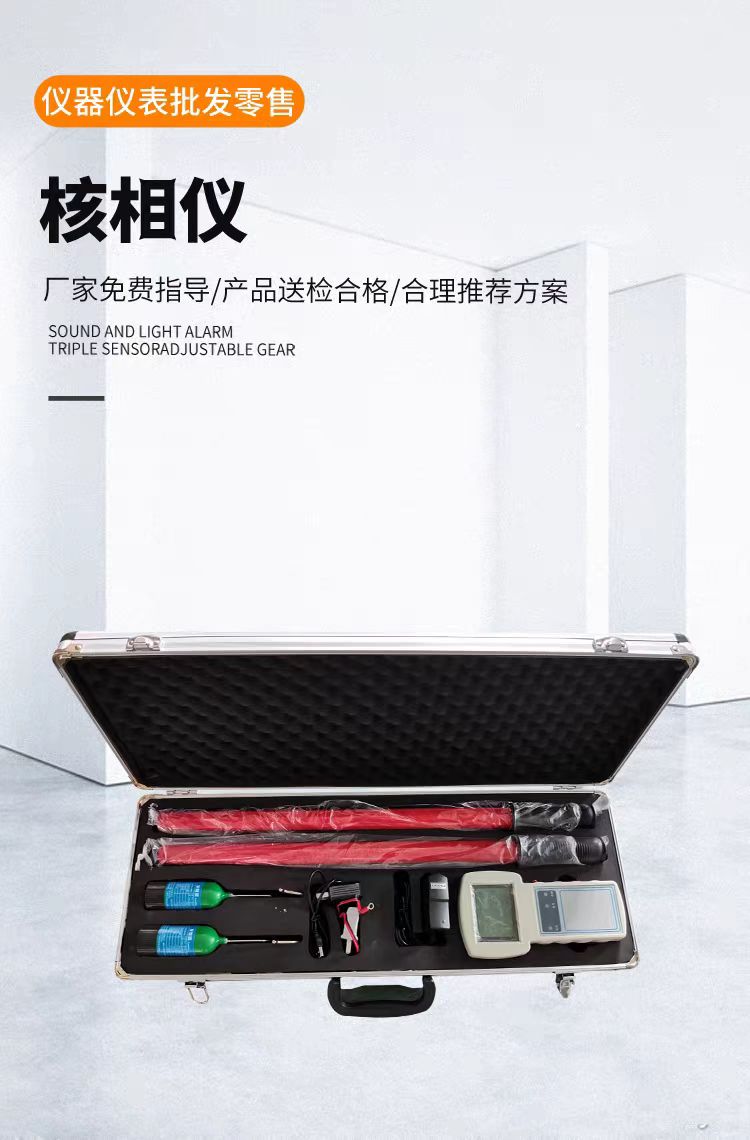
High-voltage Wireless Phase Verifier
High-voltage wireless phase verifier (also known as wireless high-voltage phase checker, phase verifier) is a precision testing instrument specially used for phase verification, phase sequence verification, and voltage detection in high-voltage power lines and substations. It uses wireless transmission technology to achieve the collection and comparison of phase signals, overcoming the disadvantages of traditional wired phase verifiers that are limited by terrain and facility structures and are dangerous to operate, greatly improving the safety and convenience of live phase verification operations.
Working Principle and System Composition
The high-voltage wireless phase verification system usually consists of two high-voltage detectors (X and Y collectors/transmitters) and a receiving host.
Signal Acquisition: The detector obtains voltage signals from high-voltage conductors through high-voltage capacitive voltage division or non-contact electric field induction principles, and processes them through filtering, amplification, etc.
Wireless Transmission and Comparison: The detector sends phase information with precise timestamps to the receiving host via radio waves (such as 315MHz, 433MHz frequency bands). The receiving host aligns the waveforms based on the timestamps, calculates the phase difference angle between the two voltage signals in real time, and automatically provides audible, visual, and digital display results.
Remote Time Synchronization: For ultra-long-distance phase verification, mainstream equipment uses satellite timing (such as GPS, BeiDou) technology to ensure that the internal clocks of each detector are synchronized with UTC time to microsecond to nanosecond levels, thereby achieving precise phase comparison over hundreds of kilometers.
Core Technical Indicators and Standards
Parameters of products from different manufacturers vary slightly, but they usually have the following core indicators:
Voltage Level: Wide coverage range, typically supporting automatic phase verification of AC transmission lines from 0.38kV to 500kV (or 220kV).
Phase Difference Accuracy: Error is usually ≤5°, frequency accuracy is ±0.1Hz.
Same/Different Phase Determination Standard: Adopts A-level standard, usually with 30° as the boundary. Phase difference <30° is determined as "same phase", phase difference ≥30° is determined as "different phase".
Transmission Distance: Short-range phase verification line-of-sight distance is generally about 100 meters to 200 meters (some can penetrate walls); remote satellite timing phase verification distance can reach 300 meters to 800 kilometers.
Implementation Standards: Complies with national power industry standards, such as DL/T408-1991, GB/T1029-2005, GB311.1-2012, etc.
Core Functions and Advantages
Multi-function Integration: In addition to the core phase verification function, it also has functions such as phase sequence measurement, high-voltage voltage detection, and frequency testing.
Non-contact Measurement: For bare conductors above 35kV, the detector does not need to directly contact the conductor; it can complete phase verification by approaching the induced electric field, with extremely high safety.
Intelligent Operation: Modern instruments are equipped with color LCD screens, supporting vector diagram display, real-person voice broadcast of results, data storage and upload, and have low voltage alarm and automatic shutdown functions.
Strong Anti-interference Capability: Built-in EMC electromagnetic compatibility technology, adaptable to various complex electromagnetic interference environments.
Safety Matters and Usage Specifications
High-voltage wireless phase verifier is a live testing tool. When using it, the electric power safety work regulations must be strictly followed:
Insulation Requirements: Operators must operate according to the high-voltage test safety distance standards, and the position of the handheld insulating rod must not exceed the guard ring (handle position). The insulating rod must undergo withstand voltage tests before first use and annually.
Battery Management: The transmitter and host usually use built-in rechargeable lithium batteries. Do not replace them with other types of batteries without authorization; if not used for a long time, charge and maintain regularly.
Environmental Restrictions: Avoid storing and using the instrument in humid, high-temperature, and dusty harsh environments.
Grid Connection Prerequisite: Before performing dual-power grid connection or ring network closed-loop operations, the phase sequence must be confirmed correct first, and then phase verification should be carried out to prevent short circuit accidents or equipment damage (such as motor reversal) due to phase inconsistency.