
7 sources
Cable Fault Tester
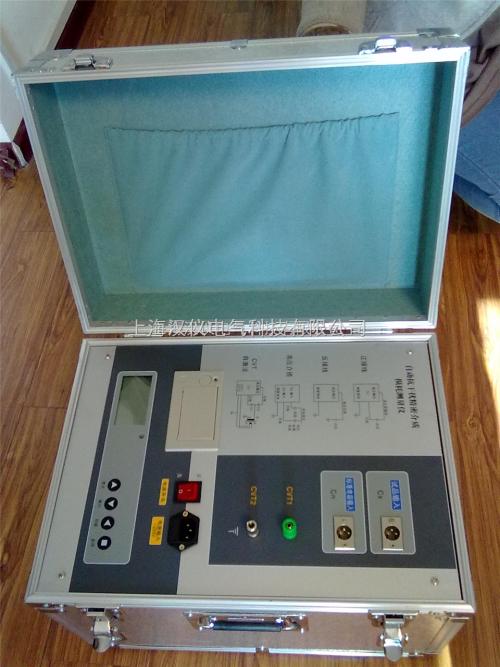
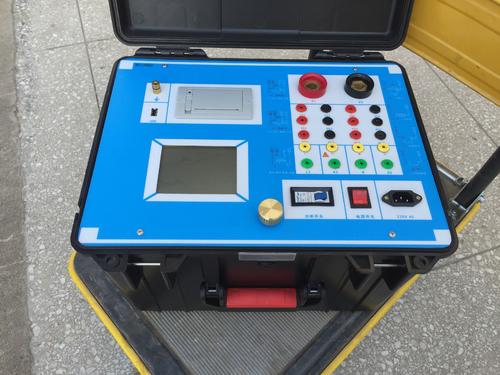
The cable fault tester is the core equipment in the operation and maintenance of power systems, specifically used to detect and locate various hidden faults in power cables and communication cables. It can lock the location of the fault point in the shortest time, greatly reducing power outage time, and is vividly called the "physical examination instrument" for cables.
Core Working Principle
The cable fault tester is not a single device, but a systematic detection solution composed of modules such as a ranging host, high-voltage unit, path instrument, and fault locator. Its core principle is to apply specific energy pulses or high-voltage signals to the cable, and then infer the fault point by analyzing reflected waveforms or acoustic-magnetic signals. Mainstream technologies include:
Time Domain Reflectometry (TDR): Low-voltage pulses are transmitted into the cable. When the pulse encounters a fault point with impedance discontinuity (such as an open circuit or low-resistance short circuit), a reflected wave is generated. By analyzing the time difference between the reflected wave and the transmitted wave, the fault distance can be precisely calculated. This method is simple to operate and is currently the most mainstream method for coarse fault location.
High-Voltage Bridge Method: Utilizing the Wheatstone bridge principle, high voltage is applied to the cable, converting high-resistance faults that are difficult to detect with ordinary instruments into measurable unbalanced signals. The fault location is determined by calculating the ratio of bridge arm resistances. This method is an important supplement to the TDR method.
Acoustic-Magnetic Synchronization Method: For complex faults such as high-resistance flashover, high-voltage pulses are applied to the cable to cause discharge at the fault point, generating sound waves and magnetic fields. Detection personnel use acoustic-magnetic probes on the ground to receive signals synchronously, and lock the precise geographical coordinates of the fault point by the time difference between the sound and magnetic field signals. This method is particularly suitable for pinpointing faults in directly buried cables.
Main Functions and Features
Fault Type Identification: Capable of automatically identifying and diagnosing various abnormal cable states such as open circuits, short circuits, low-resistance grounding, and high-resistance flashover.
Distance Measurement and Fault Pinpointing: Achieves the complete process from coarse fault distance location (ranging) to precise ground coordinate pinpointing (fault location), with errors typically controlled to meter-level or even centimeter-level.
Path and Depth Detection: Some devices integrate electromagnetic induction principles, enabling the detection of underground cable routes and burial depths while troubleshooting faults.
Intelligent Waveform Analysis: Modern equipment is generally equipped with microprocessors, supporting dual-trace waveform comparison, automatic waveform analysis, storage, and playback. Some models also incorporate AI diagnostics, reducing reliance on operator experience.
Strong Anti-Interference Capability: Equipped with digital filtering, adaptive gain adjustment, and other functions, it can operate stably in strong electromagnetic interference environments such as substations.
Common Types and Key Selection Criteria
There are many types of cable fault testers, and the selection should be matched according to actual working conditions:
Table
Download as Table
Export as Image
Classification Dimension Main Types Applicable Scenarios and Features
By Voltage Level Low/Medium Voltage Tester Suitable for 0.4kV to 35kV municipal distribution, residential buildings, and industrial/mining enterprise cables
High-Voltage High-Power Tester Suitable for 35kV and above, long-distance (several kilometers or more) high-voltage cables and high-resistance flashover faults
By Equipment Form Integrated Portable Type Small size, light weight (about 2-3kg), suitable for frequent site changes and rapid repair of short-distance cables
Split High-Power Type Large impact energy (e.g., 1800J-4000J), suitable for deeply buried, old cables, and complex difficult faults
By Application Industry Power Cable Tester Covers various high and low voltage faults in power systems, with comprehensive functions
Communication/Signal Tester Targeted at local telephone cables and railway signal cables, focusing on low-resistance, open circuit, and poor insulation detection
Key Selection Indicators:
Sampling Rate and Resolution: The higher the sampling rate (e.g., 100MHz-400MHz), the clearer the waveform details, and the higher the ranging resolution (up to 0.1m-1m level).
Impact Energy: For high-resistance faults, the greater the impact energy, the easier it is to capture clear discharge sounds on the ground. It is recommended to choose configurations above 1800J.
Test Blind Zone: For the large number of short cables in urban distribution networks, equipment with a small blind zone (e.g., ≤2m) should be selected to prevent missed detection of near-end faults.
Complete Set Configuration Compatibility: Confirm the compatibility of the host, high-voltage unit, fault locator, and path instrument, as well as whether convenient functions such as automatic waveform analysis are supported.
Main Application Fields
Power Operation and Maintenance: Urban distribution network renovation, subway tunnel power supply, wind power/photovoltaic booster station cable laying acceptance, and aging inspection.
Communication and Railway: Breakpoint and short circuit troubleshooting for direct-buried power supply cables of communication base stations, track circuits of main railway lines, and subway signal control cables.
Municipal and Industrial: Maintenance of residential building power distribution, street lamp cables, power and control cables in industrial and mining enterprises, and power supply cables along highways.
Representative Brands and Manufacturers
There are many brands of cable fault testers on the market, covering various needs from basic to high-end complete systems:
Wuhan Guoding Technology (GDGZ series): Focuses on high cost performance, supports dual-trace display and automatic waveform analysis, and the accompanying fault locator has small errors, suitable for conventional municipal and industrial/mining projects.
TFN (FB series): Outstanding performance in the operation and maintenance of long-distance cables in new energy fields such as wind power and photovoltaics. Its equipment features 200MHz high-frequency sampling, three-level pulse technology, and RTK centimeter-level mapping capability, solving positioning difficulties under high-resistance flashover and strong interference environments.
Beijing Kanggaote ("Guan Yu" series): Technologically leading in the positioning of buried cables in 10kV distribution networks, adopting a sampling rate as high as 400MHz, with display resolution up to 0.125m, and reducing the test blind zone to within 2m, greatly improving the detection rate of short cables and near-end faults.
Haizhuoer Instruments (LD-DL3): Supports moisture analysis and micro-defect detection, has strong anti-electromagnetic interference capability in substations, and the test distance can be customized up to 32km.
Ningbo Liying Precision (XJH5139 type): Combines pulse reflection and intelligent bridge methods, compact size (only 2kg), suitable for troubleshooting open circuits and mixed lines in low-voltage lines such as local telephone cables and communication cables.