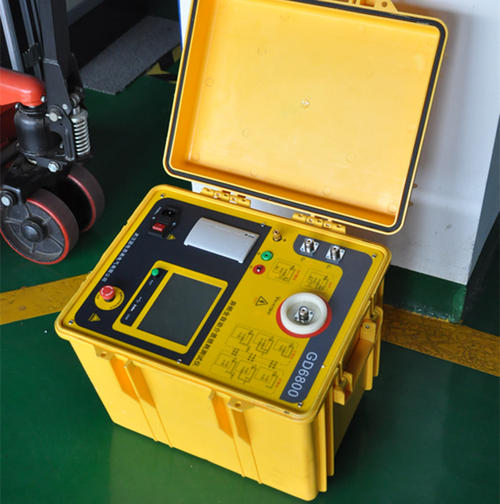

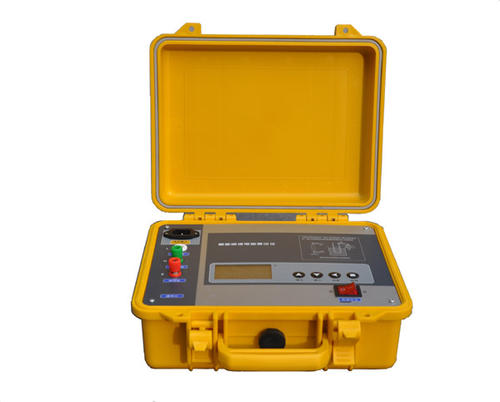
Transformer Characteristic Tester
The Transformer Characteristic Tester (also known as Transformer Comprehensive Characteristic Tester, CT/PT Characteristic Tester, etc.) is a multifunctional field test instrument specially designed for relay protection professionals. It is mainly used to comprehensively test various key electrical parameters of current transformers (CT) and voltage transformers (PT), and is the core testing equipment for evaluating transformer performance and ensuring the safe and stable operation of power systems.
Core Working Principle
Modern transformer characteristic testers typically use a microcontroller microprocessor or a DSP+FPGA dual-core architecture for data acquisition, analysis, and storage. The core working mechanism is as follows:
Automatic voltage/current boosting and reducing: The operator only needs to set the test voltage and current values, and the device can automatically boost voltage or current through the built-in MBC power control technology to complete the test.
Multidimensional data acquisition: During the test, the instrument collects voltage, current, and other data in real time, and automatically calculates the transformation ratio, knee point value, and error curve.
Waveform output: The power waveform output by the device is a standard sine wave (50-60Hz), which can truly and effectively simulate the actual operating state of the transformer, complying with national maintenance regulations.
Main Functions and Features
Modern testers feature highly integrated functions and typically possess the following core characteristics:
Fully automatic testing: Supports one-click automatic testing, where the device automatically boosts voltage/current, records data, plots the volt-ampere characteristic curve, and automatically calculates the knee point value, eliminating the tedious manual voltage adjustment and curve plotting.
Multifunctional integration: A single device can complete multiple tests for CT/PT, including volt-ampere characteristics (excitation characteristics), transformation ratio, polarity, 5% and 10% error curves, secondary circuit inspection, secondary AC withstand voltage test, and automatic demagnetization.
Deep parameter calculation: High-end models can automatically calculate deep parameters such as accuracy limit factor (ALF), instrument security factor (FS), secondary time constant (Ts), remanence coefficient (Kr), and saturated and unsaturated inductance.
Data management and transmission: Built-in large-capacity storage (can save thousands of data sets without loss upon power failure), built-in micro printer for on-site printing, and equipped with USB interface or Bluetooth module for convenient data upload to PC to generate Word reports.
High safety: Uses a single 220V power input design, fully microcomputer-controlled during testing, no manual contact required after setting, keeping test personnel away from high-voltage circuits to ensure personal safety. Common Types and Technical Routes
According to application scenarios and technical principles, transformer characteristic testers are mainly divided into the following categories:
Table
Download as Table
Export as Image
Classification Dimension Main Types Features and Applicable Scenarios
By Device Form Benchtop/Portable Comprehensive Tester Large output capacity (voltage up to 1000V-3000V, current up to 600A-1000A), suitable for routine maintenance and commissioning tests in substations.
Handheld Tester Powered by rechargeable batteries, small size, light weight, suitable for space-constrained scenarios (such as GIS, bushing CT) and rapid inspections.
By Technical Route Low-frequency method/Frequency conversion method Achieves higher equivalent test voltage without increasing power supply capacity, strong anti-interference capability, suitable for high-voltage CT knee point testing.
Combination of DC method and voltage method Breaks through the limitations of traditional power frequency method, extremely fast excitation characteristic testing, and can accurately measure ratio error and phase error.
Key Performance Indicator Reference:
Test accuracy: Conventional detection accuracy ≤0.5%, high-precision models can achieve ratio error accuracy of ±0.05%~±0.1%, and phase error accuracy of ±3min.
Output capability: Single-unit output voltage ranges from 0-1000V to 0-5000V, with maximum output current up to 600A-1000A.
Main Application Fields
Power system operation and maintenance: Acceptance tests, post-overhaul tests, and preventive tests of CT/PT in power plants and substations.
Relay protection calibration: By testing 5% and 10% error curves, verify the saturation characteristics of protection transformers under system short-circuit conditions to ensure correct operation of relay protection devices.
Equipment manufacturing and quality inspection: Used by transformer manufacturers for factory inspection, core quality assessment, and winding inter-turn short circuit troubleshooting.
Representative Brands and Manufacturers
There are many transformer tester manufacturers in the market, covering different needs from routine testing to high-end precision analysis:
Wuhan Moen Electric Intelligence (Fankester MOEORW): Its handheld transformer comprehensive tester (such as HP80 series) uses multi-point DC method, with maximum knee point voltage up to 5000V and transformation ratio measurement range up to 10000/1, especially suitable for GIS and bushing CT testing.
Wuhan Zhongke Xinyi Electric Power (ZCTP series): Focuses on frequency conversion transformer comprehensive testers, based on advanced low-frequency method testing principles, capable of handling CT testing with knee points up to 45KV, lightweight design (<9kg), suitable for portable field use.
Wuhan Haomai Electric Power (FA series): Provides multifunctional fully automatic comprehensive testers, supporting 220V/380V adaptive input, large output capacity (such as 1000V/15A), complete knee point automatic calculation functions, suitable for various routine and complex tests.
Baoding Huachuang Electric (HCFA series): Rich product line, covering various output specifications (such as 0-1000V to 0-3000V), supports completing 6 sets of transformation ratio tests at once, with comprehensive overvoltage and overcurrent protection functions.